


Urgent Care Clinic Cash Flow Problems and Solutions Today

Cash can feel tight in an urgent care clinic even when the waiting room is full. Visits are coming in, providers are busy, the team is ordering supplies, and the schedule looks healthy. Then payroll hits before payer reimbursements arrive, denial work piles up, and patient balances age past the point where they are easy to collect.
That gap between care delivered and cash received is where many urgent care clinics struggle today.
Urgent care has a unique financial rhythm. Clinics need staffing coverage for walk-in demand, enough inventory for unpredictable cases, fast billing, and tight follow-up on insurance claims. The work is local and hands-on, but the cash cycle depends on payers, patient behavior, coding accuracy, and timing. This post is informational only and does not replace financial, legal, or billing advice from qualified professionals.

Why urgent care clinics face cash flow pressure now
Urgent care clinics sit between primary care, emergency departments, and retail health. That position creates value for patients, but it also creates financial strain.
Costs are immediate. Revenue often is not.
A clinic pays for:
Clinician and support staff wages
Medical supplies and testing materials
Rent, utilities, and maintenance
Billing software and clearinghouse fees
Malpractice coverage and compliance costs
Lab partnerships and diagnostic services
Card processing fees and patient communication tools
Payment may arrive days, weeks, or even months later. Some visits are paid at the time of service. Others move through insurance verification, coding, claim submission, payer review, denial correction, and patient balance collection.
That timing mismatch is the heart of cash flow urgent care clinics challenges.
This is also why urgent care clinics budgets need to separate profit from cash. A clinic may look profitable on paper because it delivered many billable visits. Yet it can still struggle to cover payroll if too much revenue sits in accounts receivable.
The most common cash flow problems in urgent care clinics
Cash flow problems rarely come from one issue. More often, several small leaks build into a larger problem.
Insurance payments arrive too slowly
Most urgent care revenue depends on insurance contracts. Even when claims are clean, payment is not instant. If claims have missing information, coding errors, eligibility problems, or payer-specific requirements, the wait gets longer.
Common causes include:
Incomplete patient registration
Incorrect insurance details
Services billed with missing modifiers
Claims submitted after internal delays
Slow denial follow-up
Outdated payer rules in the billing workflow
A high visit count can hide this problem for a while. The clinic looks busy, but cash does not keep pace with care volume.
Patient responsibility is harder to collect later
More patients now have high-deductible health plans or larger out-of-pocket costs. That means patient balances matter more than they used to.
The problem is timing. Patients are easiest to collect from when they are in the clinic or actively engaged after the visit. Once several statements have gone out, the odds of full payment often drop.
Urgent care teams may avoid direct payment conversations because they want to keep the patient experience positive. That is understandable. Still, weak front-end collection creates back-end pressure.
A practical intake process should make payment clear without feeling harsh:
Verify benefits before or during check-in when possible
Collect known copays at the visit
Explain estimates as estimates, not guarantees
Offer digital payment options
Send balance reminders quickly after adjudication
The goal is not aggressive collection. The goal is clear expectations.

Supplies and testing costs rise before revenue does
Urgent care clinics need to stay ready for a wide range of visits. Respiratory illnesses, injuries, infections, school physicals, and occupational health needs can change demand quickly.
Inventory pressure can come from:
Over-ordering supplies that expire
Last-minute purchases at higher prices
Stockouts that force referral of billable services elsewhere
Seasonal spikes in testing materials
Poor tracking of high-cost items
Supplies are not just an expense. They are cash sitting on shelves. Too little inventory hurts service. Too much inventory traps money that could cover payroll or rent.
Staffing costs are high and hard to flex
Staffing is often the largest expense for urgent care clinics. The challenge is that walk-in volume is hard to predict.
If staffing is too lean, wait times grow, patients leave, reviews suffer, and staff burn out. If staffing is too heavy, labor costs eat cash during slower periods.
Clinics also face pressure from:
Overtime
Sick coverage
Provider shortages
Weekend and evening coverage
Training time for new staff
Higher wages in competitive markets
Urgent care needs enough coverage to move patients safely and efficiently. The financial goal is not simply to cut hours. It is to match labor to demand more closely.
Denials and underpayments delay cash
Denied claims are one of the most damaging cash flow problems because they create extra work after the visit is already complete. Each denied claim needs review, correction, resubmission, or appeal.
Underpayments can be just as costly. If the billing team does not compare payments against contract terms, the clinic may accept less than it should.
Common denial triggers include:
Eligibility errors
Prior authorization confusion for certain services
Coding mismatch
Missing documentation
Timely filing issues
Coordination of benefits problems
A denial is not only delayed revenue. It is also staff time spent getting back to where the clinic expected to be in the first place.
Seasonality makes planning harder
Urgent care volume changes during the year. Flu season, back-to-school periods, holidays, local employer needs, sports physicals, and weather patterns can all affect demand.
Seasonality creates two risks:
High-volume months | Low-volume months |
Staff may need more hours, supplies, and testing materials before cash arrives. | Fixed costs continue even when visits slow down. |
Billing backlogs can grow if the revenue cycle team cannot keep up. | Cash reserves may shrink if the clinic did not save during stronger months. |
The clinics that handle seasonality best build a cash plan before the swing happens.
How to diagnose the real cash flow issue
Before changing systems or cutting costs, clinics need to know where the cash is getting stuck.
A simple monthly review can reveal a lot. Leadership should look at operating data and cash data together. Visit volume alone is not enough.
Key indicators include:
Days in accounts receivable
Net collection rate
Denial rate by payer
Patient balance collection rate
Average reimbursement by visit type
Labor cost as a share of collections
Supply cost per visit
Claim lag from visit date to submission date
Cash on hand in weeks or months
The most useful view is trend-based. A single month can be misleading. Three to six months usually shows patterns.
For example, if visits increased but cash stayed flat, the issue may be payer delay, failing collections, coding changes, or a shift in payer mix. If cash rose but profit fell, supply or labor costs may be the issue.
A clinic should also compare front-end and back-end processes. Many revenue problems begin before the claim is ever submitted.
Questions worth asking include:
Are patient demographics verified every visit?
Are insurance cards scanned or captured clearly?
Are copays collected consistently?
Are providers documenting the level of service clearly?
Are claims submitted daily?
Are denials worked by age and dollar value?
Are payer contract terms checked against payments?
Small process gaps repeated hundreds of times can create a serious cash problem.

Practical solutions that improve cash flow
Cash flow improvement usually comes from better timing, cleaner claims, smarter staffing, and stronger patient payment habits. The best changes are specific and repeatable.
Tighten registration and eligibility checks
Clean claims start at check-in. Registration errors can delay payment even when care and coding are correct.
Helpful steps include:
Confirm patient name, date of birth, address, and insurance at every visit
Use eligibility tools before service when possible
Capture clear images of insurance cards and identification
Flag coordination of benefits issues early
Train front-desk staff on common payer problems
This work may feel basic, but it protects the entire revenue cycle.
Submit claims quickly and consistently
Every day a claim waits to be submitted is another day cash is delayed. Clinics should aim for a steady claim submission rhythm, often daily when volume allows.
That requires clean handoffs from clinical documentation to coding to billing. If charts sit unsigned or documentation is incomplete, billing slows down.
A strong process includes:
Same-day or next-day chart completion goals
Clear documentation templates for common urgent care visits
Regular coding feedback for providers
Daily claim queue review
Fast correction of rejected claims
Rejected claims should not sit in a queue unnoticed. They need ownership and a timeline.
Work denials by pattern, not only by claim
Many clinics handle denials one at a time. That may recover some money, but it does not fix the root cause.
A better approach is to group denials by payer, reason, location, visit type, or provider documentation issue. Patterns show what needs repair.
For example:
If one payer denies a common test often, review payer rules and coding.
If one location has more eligibility denials, retrain the check-in process.
If documentation denials cluster around a visit type, improve templates and provider guidance.
Fixing the source reduces future rework.
Collect patient balances earlier
Patient collections should be simple, respectful, and consistent.
At the visit, staff can collect known copays and explain that additional balances may apply after insurance processes the claim. After adjudication, clinics should send clear statements quickly through the patient’s preferred channel when possible.
Payment options help. Many patients respond better when they can pay by text link, portal, phone, or card at the clinic. For larger balances, reasonable payment plans can recover cash without creating a poor patient experience.
The message should be direct:
What service the balance relates to
What insurance paid or adjusted
What the patient owes
How to pay
Who to contact with questions
Confusing bills delay payment.
Match staffing to visit patterns
Staffing affects both patient care and cash. Clinics should review visit volume by hour, day, season, and service type. That data can guide shift design.
Better staffing control may include:
Staggered start times
Part-time or per diem pools
Cross-trained team members
Longer coverage during predictable peaks
Shorter coverage during known slow blocks
On-call backup during seasonal surges
Cutting staff too deeply can backfire. The goal is to reduce avoidable overtime and idle time while keeping patient flow safe.
Manage supplies with a cash lens
Inventory needs a simple system. Clinics should know what they use often, what expires, what costs the most, and what can be ordered on a predictable schedule.
Useful practices include:
Set minimum and maximum stock levels
Track expiration dates
Review usage by season
Standardize items when clinically appropriate
Avoid large orders that exceed realistic demand
Assign one person to monitor high-cost supplies
Even a modest reduction in wasted supplies can free up meaningful cash.
Build a reserve for slow periods
A cash reserve gives clinics space to handle payer delays, seasonal drops, equipment repairs, or unexpected staffing costs. The right amount varies by clinic size, fixed costs, and risk tolerance.
Start with a practical target. Many clinics first aim to cover several weeks of core operating expenses. From there, they can build toward a stronger reserve.
The key is to treat the reserve like a planned operating need, not leftover money. During stronger months, transfer a set amount before spending expands.
Where technology can help and where it cannot
Technology can improve cash flow, but it cannot fix unclear ownership or weak habits by itself.
Useful tools often support:
Eligibility verification
Digital check-in
Claims scrubbing
Denial tracking
Patient text-to-pay
Reporting dashboards
Online statements
Inventory tracking
Scheduling forecasts
The clinic still needs people to use the tools well. A denial dashboard has little value if no one reviews it. Digital payment links help only if statements are clear and sent on time.
When evaluating systems, urgent care leaders should ask practical questions:
Will this reduce claim errors?
Will this speed up payment?
Will this make patient payment easier?
Will staff actually use it?
Does it show the metrics we review each month?
Will it connect with our current billing workflow?
A tool that saves time and improves collections can support cash. A tool that adds clicks without changing outcomes becomes another cost.
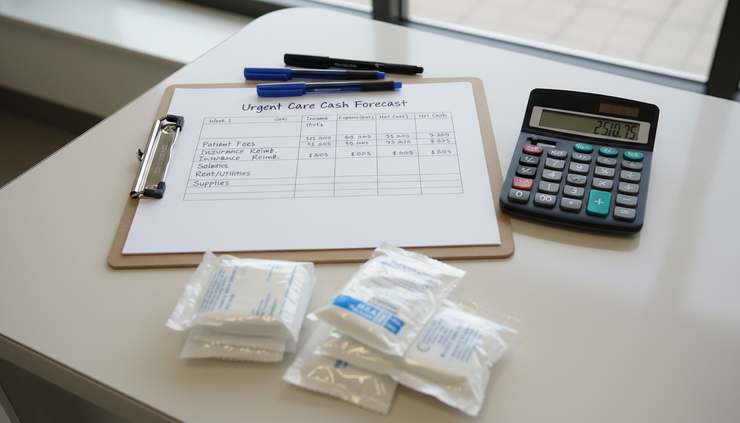
A 30-day cash flow reset for urgent care clinics
A clinic does not need to fix everything at once. A focused 30-day reset can create momentum.
Week 1
Review the last three to six months of cash, visits, denials, accounts receivable, and patient collections. Identify the top three causes of delayed cash.
Week 2
Audit registration and claim submission. Check how often insurance data is missing, charts are unsigned, or claims wait before submission.
Week 3
Focus on denials and patient balances. Sort denials by reason and payer. Review how quickly patient statements go out after insurance processes claims.
Week 4
Adjust one staffing issue and one supply issue. Choose changes that are easy to measure, such as reducing overtime during a slow block or setting reorder limits for expensive supplies.
At the end of the month, compare cash received, claim lag, denial patterns, and patient payments. Keep what worked. Pick the next two problems to fix.
The takeaway for urgent care clinic cash flow
Cash flow problems in urgent care usually come from timing, process gaps, and cost pressure. Busy clinics can still feel squeezed when claims move slowly, patient balances age, supplies tie up cash, and staffing does not match demand.
The strongest clinics manage cash as an operating discipline. They verify information early, submit clean claims fast, track denials by pattern, collect patient responsibility clearly, watch supply use, and plan for seasonal swings.
Better cash flow does not happen from one dramatic change. It comes from small, steady habits that protect every dollar from check-in to final payment.
If you need guidance on cash flow and budgeting, do not hesitate to contact Advanced Healthcare Business Management today. We are here to help you.


Comments